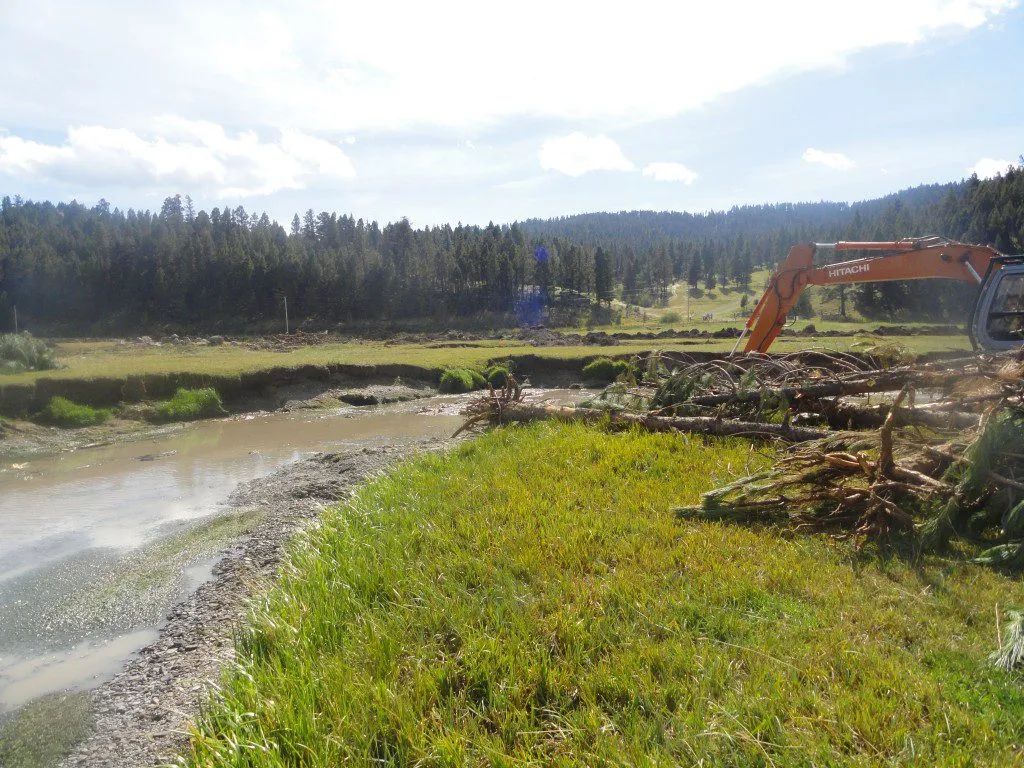
A mitigation site has one job: satisfy the permit. The grades, the hydrology, the vegetation, and the monitoring all trace back to compliance requirements that someone else will verify. The contractor you put on that site either builds your credits or builds your problems.
Glacier Excavating builds wetland construction and mitigation projects to compliance specifications across Montana, Wyoming, Idaho, Washington, and Oregon. We have specialized in stream and wetland restoration since 2004, with erosion control measures used throughout every build to protect water quality and fish habitat. Our record includes wetland restoration and aquatic resource mitigation sites across the Northern Rockies, built by the same Rosgen-trained crew that has constructed more than 70,000 lineal feet of restored stream.
What Is Wetland Mitigation Construction?
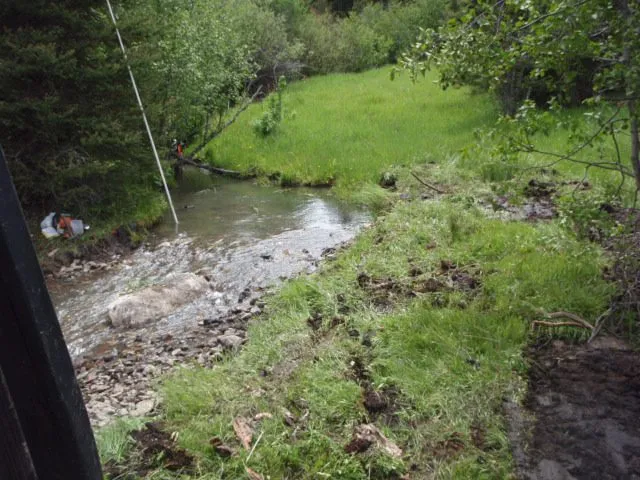
Wetland mitigation construction is the earthwork that creates, restores, or improves a wetland to compensate for wetland impacts permitted somewhere else. The mitigation site is designed by scientists and engineers, permitted through the regulatory process, and then handed to a contractor to build to exact elevations and specifications.
The construction determines whether the site works. Wetland hydrology lives or dies by inches of elevation. Grade a bench too high and it stays dry; too low and it ponds when the design wanted saturation. That is why mitigation earthwork belongs with crews who build water-driven projects for a living.
For project owners, the stakes are practical. A mitigation site that fails its performance standards means more monitoring years, more corrective work, and more cost against the same permit. A site built to spec starts succeeding in its first growing season.
Mitigation comes in several regulatory flavors, and the construction differs with each. Restoration re-establishes wetland on ground that historically held it, usually the highest-value work because the soils and water want to cooperate. Establishment creates wetland where none existed, which demands the most from grading and water design. Rehabilitation lifts degraded wetlands that still function partially. Preservation protects existing resource and needs no earthwork at all. Most construction contracts we see are restoration and establishment, often combined on one site.
Every mitigation site also carries performance standards: measurable requirements for hydrology, vegetation, and sometimes soils, checked over a monitoring period that commonly runs five to ten years. Construction cannot guarantee monitoring success by itself, but construction error is the one cause of failure that is fully preventable. Grades built to tolerance take the biggest failure mode off the table on day one.
Problems Wetland Mitigation Construction Solves
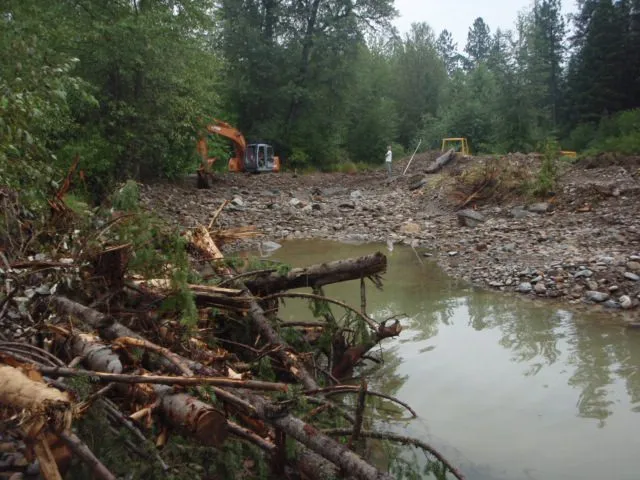
Mitigation work exists because impacts happen and permits require compensation. Good construction solves the problems that keep mitigation sites from performing.
Permit Obligations That Need Real Acreage
When a project impacts waters of the U.S., the permit requires compensatory mitigation. We build the sites that turn that obligation into functioning wetland acreage delivered to the compliance documents.
Hydrology That Misses the Mark
The most common mitigation failure is wrong water. Precise grading to design elevations, checked with GPS grade control, puts the site surface exactly where the design hydrology needs it.
Sites That Erode Before They Establish
A freshly graded site is vulnerable until vegetation holds it. We install and maintain erosion control through the whole build, and we finish surfaces with microtopography that catches water and seed instead of shedding them.
Slow, Patchy Revegetation
Bare dirt takes years to become wetland. Harvested sod mats, willow clusters, and transplanted live material give a site living cover in its first season. We harvest and place that material as standard practice on restoration builds.
Construction Damage to the Resource
A mitigation site trashed by its own construction is a contradiction, and it happens. Our equipment paths, staging areas, and dewatering plans are set before work starts, specifically to minimize disturbance to existing vegetation and soils.
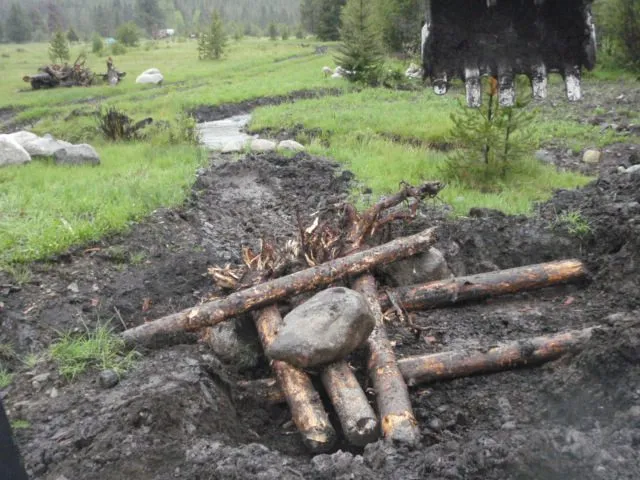
When a Project Calls for a Wetland Mitigation Contractor
The direct sign is a permit condition requiring compensatory mitigation, a mitigation banking instrument, or an in-lieu fee project ready for construction. From there, the site conditions decide what kind of contractor the work needs.
Project Types We Build
- Permittee-responsible mitigation sites tied to 404 permits
- Wetland restoration on drained or degraded historic wetlands
- Wetland creation and floodplain reconnection alongside stream projects
- Aquatic resource mitigation connected to lakes and springs
- Reclamation projects where new wetland and floodplain replace mined ground, like our placer mining reclamation work that has created over 100 acres of new floodplain
What the Construction Package Should Cover
- Design grades and tolerances for every wetland surface
- Water management: diversion, dewatering, and where water goes during the build
- Soil handling, including salvage and placement of wetland topsoil where specified
- Revegetation methods, sources, and timing
- Erosion control requirements and maintenance responsibility
Why Crew Background Matters on Mitigation Sites
Wetland earthwork punishes contractors who treat it like site grading. Equipment sinks, grades drift, and hydric soils smear into pavement under the wrong tracks. Our operators spend their working lives on saturated ground beside live water. The habits that protect a stream build protect a wetland the same way.
Equipment selection is part of that background. Saturated ground calls for low-ground-pressure machines, tracked haulers instead of wheeled trucks, and operators who read the ground ahead of their tracks. Glacier runs excavators, dozers, tracked trucks, front end loaders, and skid steers across our crew, and matching the machine to the ground is a daily decision our foremen make without being asked.
How Performance Standards Shape the Build
Read your mitigation plan’s performance standards before construction starts, because they tell the contractor where precision matters most. A hydrology standard tied to growing-season saturation makes finish grades on the wetland surface the critical tolerance. A vegetation standard makes soil condition and live material handling the priority. We build to the whole plan, but we put our tightest verification where your monitoring team will be measuring for the next decade.
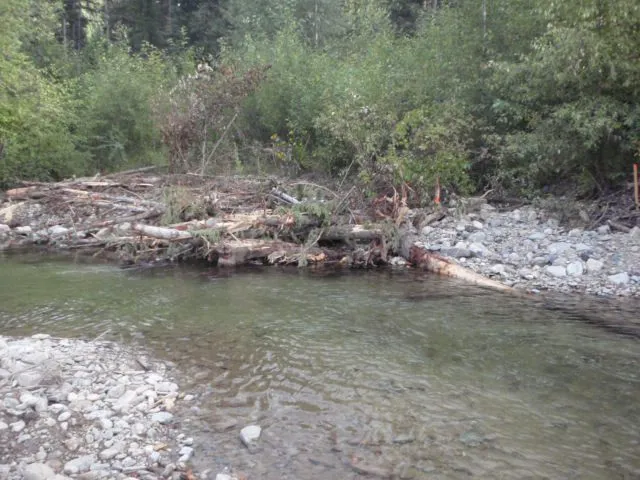
Wetland Construction Capabilities We Deliver
Every mitigation site combines the same core operations. Glacier fields all of them with our own crew and equipment.
Grading to Design Elevations
We cut and fill wetland surfaces, benches, and swales to the design’s elevations and tolerances, verified with GPS grade control. Hydrology starts with grade, so grade is where our precision concentrates.
Microtopography Treatment
Flat wetlands are plumbing; textured wetlands are habitat. We finish surfaces with the hummocks, depressions, and roughness the design specifies, the same microtopography treatment we build on stream restoration floodplains.
Water Management
Mitigation construction usually happens in ground that wants to be wet. We plan and run the diversions, dewatering, and pumping that keep work areas buildable, with the same care for water quality we bring to in-channel work.
Revegetation and Live Material
Sod mat harvest and placement, willow clusters, brush layering, and planting support turn graded ground into growing wetland. Live, local material establishes fastest, and we handle it from harvest through placement.
Erosion and Sediment Control
Erosion control measures protect water quality and fish habitat through every phase of our work. SWPPP-certified preparers and administrators on the crew keep the site compliant from mobilization to stabilization.
Structures and Outlets
Where designs include outlet controls, grade structures, or bank stabilization elements at wetland margins, the same crew that has built 2,500+ in-stream structures builds them here.
Soils, Water, and Plants: The Three Systems Wetland Construction Handles
A wetland is three systems agreeing with each other. Construction succeeds when it serves all three at once.
Hydric Soils
Wetland soils behave nothing like upland fill. They compact differently, smear under pressure, and carry the seed bank and organic material a new wetland needs. Where the design salvages wetland topsoil, we strip, stockpile, and replace it to the specified depths and handling limits, because that soil is the site’s biological head start.
Water on a Schedule
Wetland hydrology is seasonal by definition. The design sets surface elevations against expected water levels through the year, which is why finish grades carry tight tolerances and why we verify them with GPS control rather than eyeballing. Water management during construction matters just as much: dewatering has to keep work areas buildable without dropping the water the adjacent resource depends on.
Vegetation That Arrives Alive
Seed takes seasons. Live material takes root now. Sod mats and willow clusters harvested nearby carry local genetics and arrive with their soil community intact. Handling them fast and planting them right is crew work we have done on restoration sites for two decades.
Our Wetland Mitigation Construction Process
The sequence protects the site. Here is how a Glacier mitigation build runs.
Document and Site Review
We review the mitigation plan, grading design, and permit conditions, then walk the site with your team. Bob coordinates directly with oversight personnel to confirm access, staging, and how the design fits existing conditions.
Water and Access Planning
Before equipment arrives we set the dewatering plan, staging areas, and equipment paths of least disturbance. On wetland sites this step decides how much of the existing resource survives construction untouched, so we take it seriously.
Bulk Earthwork
Cuts, fills, and rough grading move the site toward design elevations. Soil handling follows the specifications, including separate handling of salvaged wetland soils where the design uses them.
Finish Grading and Microtopography
Final surfaces come to tolerance under GPS grade control, then get their microtopography treatment. This is where a mitigation site’s hydrology is actually built, and it is finish work our operators specialize in.
Revegetation and Stabilization
Live material placement, seeding support, and erosion control bring the site to stable, establishing condition. The goal, as on every Glacier project, is permanent and rapid stabilization with minimum construction impact.
Closeout With Your Monitors
We complete the work in accordance with the contract documents and coordinate final grades and documentation with your inspectors and monitoring team, so the as-built record starts clean.
When Wetland Construction Happens
Timing is a design variable on wetland sites, and owners who understand the calendar get better bids and better outcomes.
The Dry-Season Window
Late summer and fall are the workhorse windows: water tables at their lowest, ground at its firmest, and the least dewatering effort per yard moved. Most bulk earthwork wants to land here, and construction schedules are usually built backward from it.
Winter’s Quiet Advantage
Frozen ground carries equipment that soft ground cannot, which makes winter a legitimate window for certain access, clearing, and haul operations on sites that would rut badly in October. Our crews work all seasons, with at most a brief layoff in the hardest frozen stretch, and we use winter deliberately where it serves the site.
Timing the Living Material
Live material runs on its own calendar. Willow harvest and placement want dormancy. Sod mats move best when they can re-root quickly. Seeding windows are set by the specification. A good construction schedule braids these biological deadlines through the earthwork sequence, which is exactly the kind of planning we bring to the pre-construction conversation with your team.
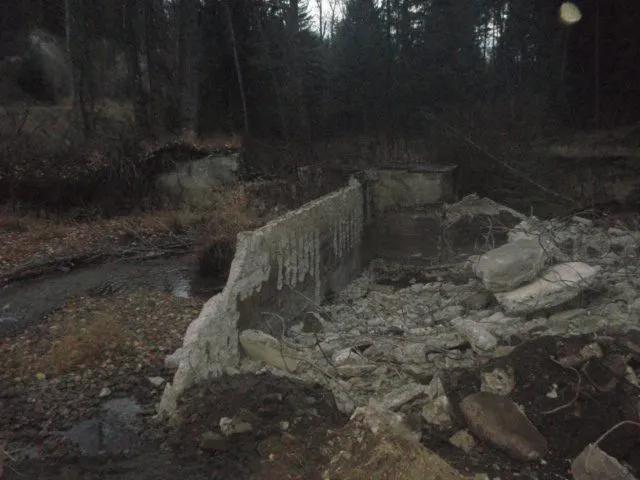
Why Choose Glacier Excavating for Wetland Mitigation
The honest answer: because wetland work rewards exactly the habits our crew has built over two decades of restoration construction.
Restoration Specialists Since 2004
Glacier has specialized in stream and wetland restoration since 2004. Wetland mitigation is not a line we added to win bids. It is half of what the company was built to do.
A Record on Real Mitigation Sites
Our project list includes wetland restoration and aquatic resource mitigation work across the Northern Rockies, alongside reclamation that created 100+ acres of new floodplain. The names are on our Projects page.
Precision Grade Control
GPS-guided grading, operators with 15,000 to 25,000 hours of seat time, and a foreman bench that verifies elevation as it builds. Wetland hydrology needs inches. We deliver them.
Compliance as Standing Procedure
SWPPP certifications on the crew, erosion control on every site, and an office manager, Marriah Miller, who has produced submittals, insurance documents, and compliance reporting since 2014.
Trusted by the Fisheries Community
Bob Cuffe received the Montana AFS 2015 Outstanding Individual Award for contributions to protecting fisheries resources. The same care extends to every wetland and spring complex we touch. Read the full crew’s credentials on our About page.
Five-State Reach
We mobilize for mitigation work across Montana, Washington, Oregon, Idaho, and Wyoming.
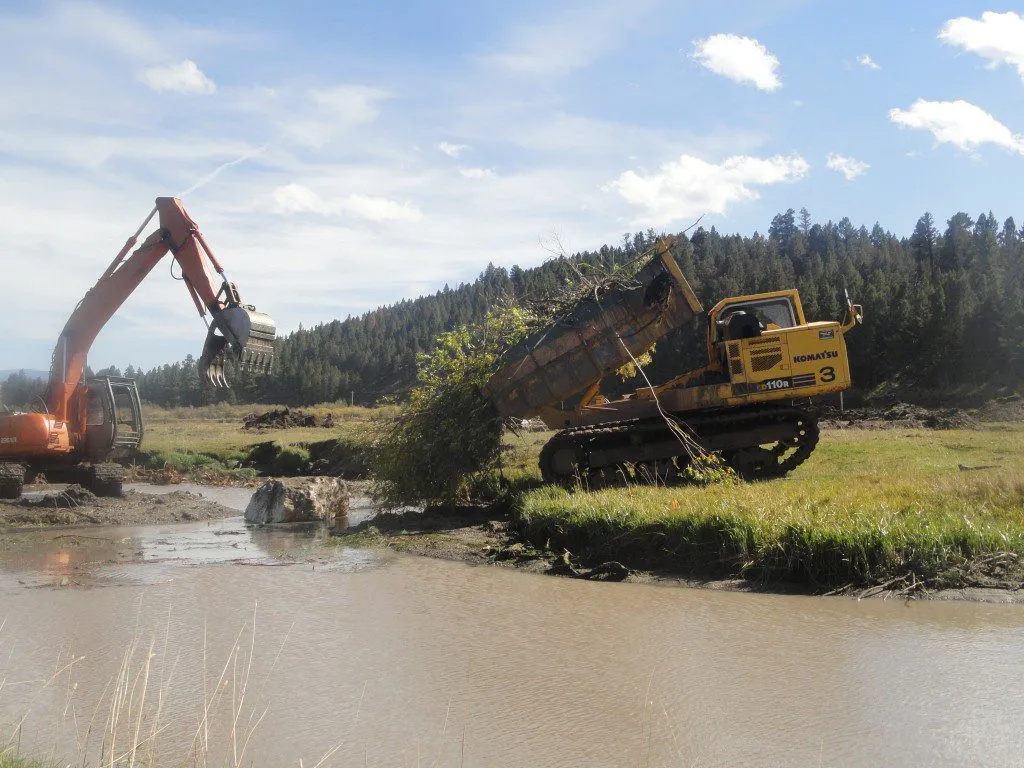
The Equipment Behind Wetland Construction
Wetland sites are won and lost on ground pressure. Glacier’s fleet of excavators, dozers, tracked trucks, front end loaders, and skid steers gives our foremen options for every ground condition a mitigation site serves up, from firm benches to saturated bottoms.
Tracked machines carry the day on wet ground, spreading weight where a wheeled truck would bury itself and smear the soils the design is trying to protect. GPS grade control on the shaping equipment holds finish surfaces to the tolerances wetland hydrology demands, and light equipment handles live material placement without compacting the growing surface it just built.
The same water discipline that governs our in-channel work governs wetland sites: fueling and maintenance away from water and wetlands, planned crossings, erosion control maintained daily. A mitigation site under construction is still a water resource, and we treat it like one from the first pass to the last.
Understanding Wetland Mitigation Costs and Bidding
The straight answer: mitigation earthwork is priced from the grading plan, the water management scope, and the revegetation package, and no two sites price alike. Anyone quoting wetland work by the acre without documents is guessing.
Factors That Drive Mitigation Construction Costs
Cut and fill volumes: the earthwork quantity is the cost backbone. Water management: how wet the site is during construction, and what the dewatering plan takes to run. Soil handling: salvage, stockpiling, and replacement add handling passes. Live material scope: sod mat and willow harvest is crew-time intensive and worth it. Access and haul: distance from staging to placement. Season: frozen or saturated windows change production rates.
The Cost of Building It Wrong
A mitigation site that misses performance standards owes corrective construction plus added monitoring years. Building to tolerance the first time is the cheapest wetland you will ever buy.
What a Complete Mitigation Bid Package Includes
The bids you can actually compare come off complete packages: the grading plan with tolerances, the mitigation plan with performance standards, soil handling requirements, water management expectations, the planting and live material scope, and access constraints. Include the monitoring plan too. Contractors who see what will be measured build toward the measurement.
How Glacier Bids Mitigation Work
Send the mitigation plan and bid documents through our contact page. Bob reviews the grading and water scope personally and gives you a bid built from the documents, along with a straight answer about schedule fit for the construction window.