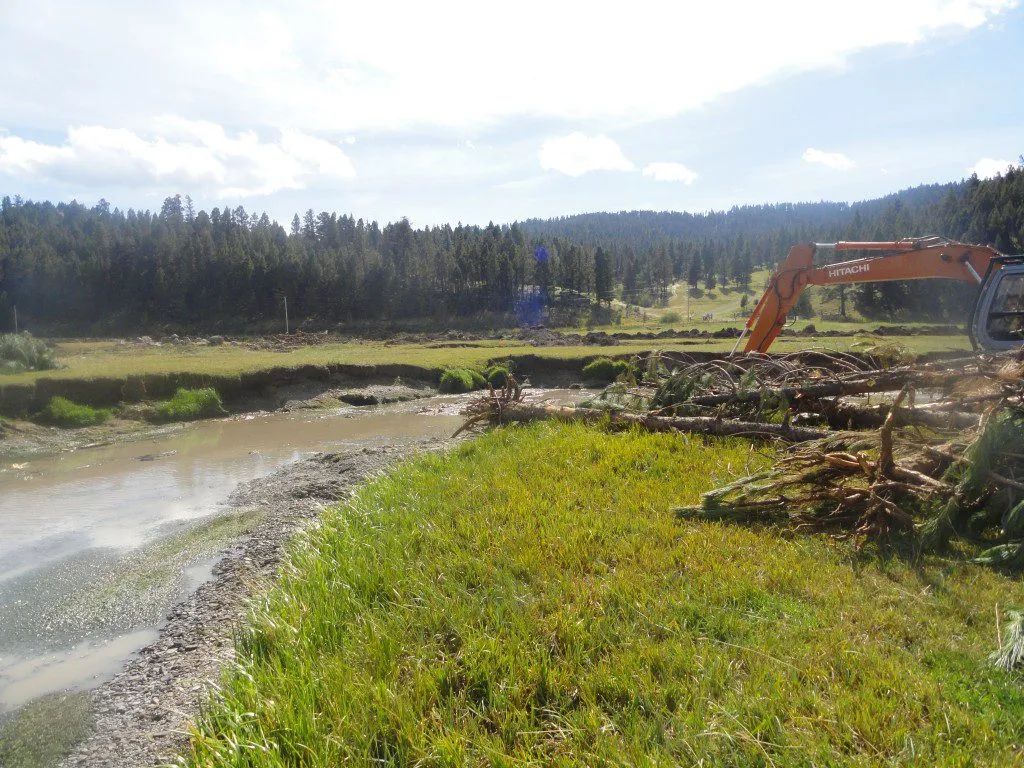
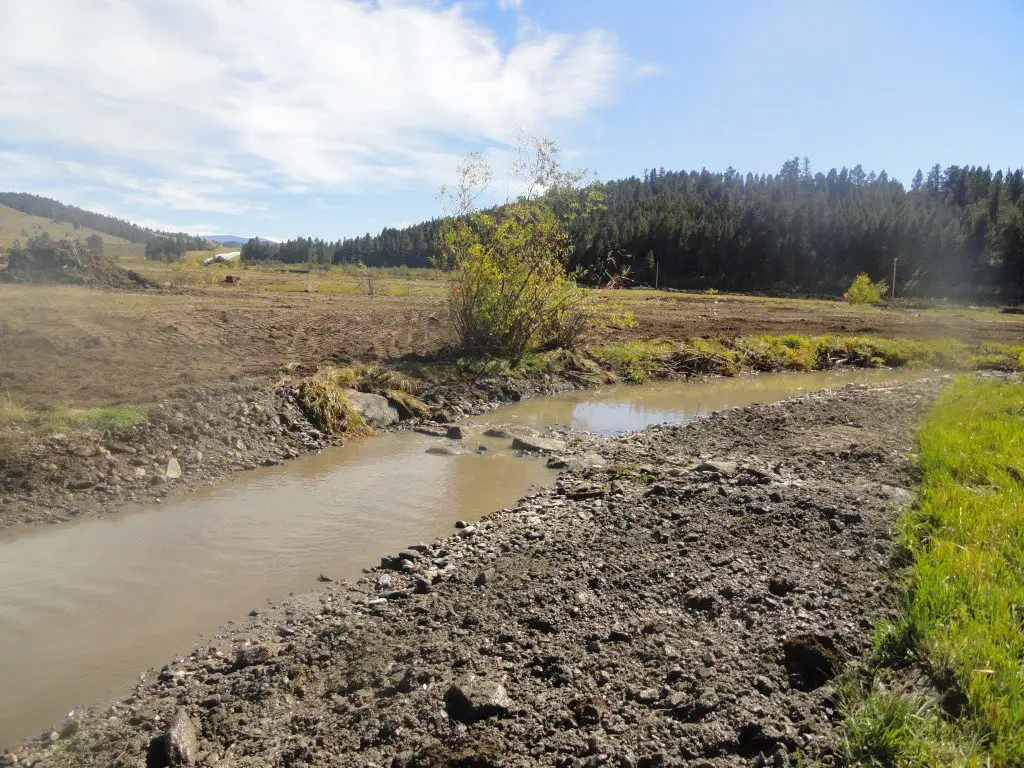
Washington’s restoration market is one of the most active in the country, and Glacier Excavating serves it with a crew that has built engineered stream projects since 2004. If you have a Washington project out to bid, call (406) 297-3155 or send the scope through our project inquiry form for a straight answer on fit and mobilization.
Straight talk about our record here: Glacier’s named project list runs through Montana and Idaho, and Washington is served by mobilization rather than by a local project history. What mobilizes is substantial: 70,000+ lineal feet of constructed channel, 2,500+ engineered structures, production-scale reclamation experience, and Rosgen-trained operators who build habitat as the working product, which is exactly what Washington’s fish-driven projects demand.
Restoration Services We Build Across Washington
Glacier brings its complete service line to Washington projects.
Stream Restoration: Engineered channel construction, constructed riffles, floodplain reconnection earthwork, and revegetation, built to the documents and finished for habitat.
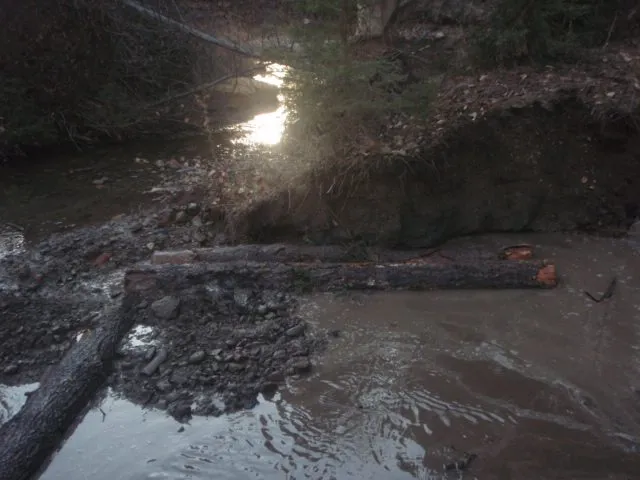
Bank Stabilization: Habitat-forward structures: log and rock vanes, woody debris jams, J-hooks, and grade controls. Structure work that protects banks while building the cover and pools fish recovery depends on.
Wetland Mitigation: Mitigation-site grading to tight tolerances, microtopography, soil handling, and live material placement for sites that must meet performance standards.
Placer Mining Reclamation: Valley-scale reclamation earthwork for mined and heavily disturbed drainages, at 100,000+ cubic yards a season.
When Washington Projects Call for Glacier
Washington restoration ranges from Columbia Basin tributaries to mountain streams, much of it driven by salmon and steelhead recovery, floodplain reconnection, and infrastructure retrofits.
Call us for the bid when your project involves:
- Engineered log structures, jams, and habitat construction with placement tolerances
- New or reconstructed channel with defined geometry
- Floodplain reconnection or levee setback earthwork
- Wetland mitigation grading to compliance specifications
- Dewatering, diversion, and fish exclusion during construction
Talk to us before final design when:
- The team wants constructability input on sequencing and water management
- Structure quantities need a production-rate check against the fish window
- Access and staging in working river corridors are still open questions
Why Washington Project Teams Choose Glacier
The direct case: habitat is our native discipline, and our structure record is exactly the work Washington projects specify most.
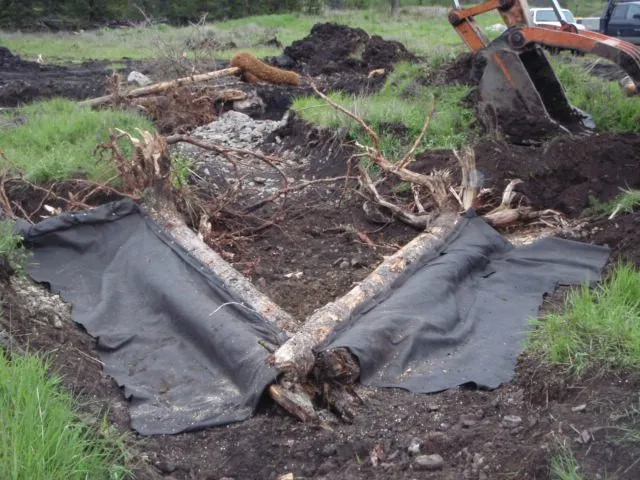
Wood and structure fluency: 2,500+ engineered structures built, from debris jams to cross vanes, by operators who understand that in recovery projects the structure is the deliverable. The record is on our Projects page.
Precision under fish windows: permitted work windows compress everything. Our crews sequence water management, construction, and turn-in inside tight mountain seasons as standard practice.
Rosgen-trained, habitat-first: training from Wildland Hydrology through Level II, and a 2015 award from Montana’s fisheries professionals for how our work treats trout water. Crew details are on our About page.
Self-contained mobilization: owned equipment, a 12-person seasonal crew, and long deployments as normal operations. Eastern Washington sits a day’s mobilization from our Eureka base.
Compliance in order: SWPPP-certified personnel, erosion control throughout, $1,000,000 in coverage, and submittals from a practiced office.
Serving Washington’s Watersheds
Washington’s restoration investment concentrates where fish recovery does: the Columbia and Snake tributaries of the east side, the mountain streams coming off the Cascades, and floodplain reconnection projects throughout. Oversight and funding flow through bodies including the Washington Department of Ecology, salmon recovery boards, tribes, and federal partners, and contractors on these projects build under real scrutiny, which suits us fine. Our sites have passed that kind of watching for twenty years.
Washington projects also lean hard on engineered wood, and wood is a Glacier specialty: harvesting, handling, ballasting, and placing structural material so it stays where the design put it.
Glacier serves Washington alongside neighboring Idaho, where our St. Joe River and Panhandle work sits within a short mobilization of the Washington line, and Oregon to the south. Eastern Washington projects are the natural extension of our Panhandle range, and statewide deployment is a scheduling question, not a capability one.
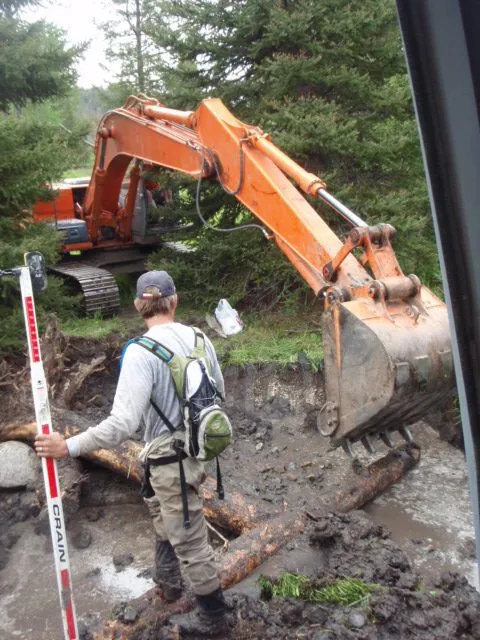
Wood Is Washington’s Working Material
Washington restoration designs lean on large wood more heavily than almost any other state’s, because salmon recovery science put engineered logjams and wood-rich channels at the center of the playbook. That plays directly to a Glacier strength. Wood is a material we harvest, handle, ballast, and place every season: root fans oriented to rack debris, key pieces buried to depth, whole assemblies built dense enough to tighten under flood load instead of shedding.
Structure tolerances are where wood projects succeed or fail, and our 2,500-structure record is the evidence we bring to a Washington bid. The crew that sets a jam on your tributary has set hundreds before it, under the same kind of oversight your project carries.
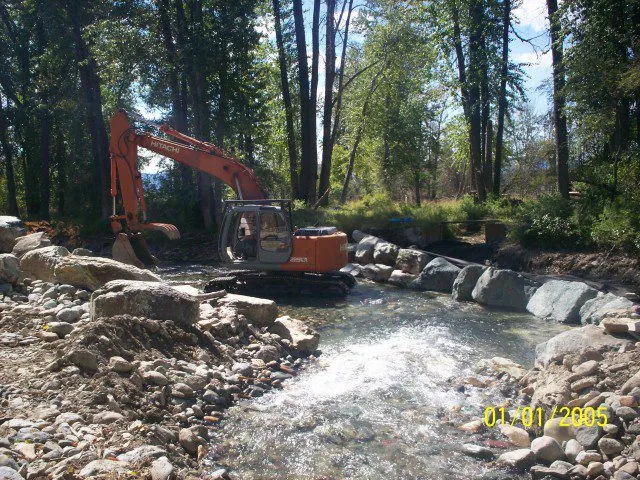
What a Washington Deployment Looks Like
Washington work runs as a planned deployment with mobilization priced transparently. The crew arrives self-sufficient: our own excavators, tracked haulers, dozers, and support equipment, crewed by operators who have spent whole careers on remote water. From there the project runs on standing Glacier procedure: water management planned before disturbance, staging set for least impact, GPS grade control against your surfaces, and erosion control maintained every day the site is active.
Fish windows get built into the bid schedule from the start. If a structure count and a July window do not fit each other, that conversation happens at bid time, backed by production rates from more than two decades of structure work.
How Bidding Works With Glacier in Washington
Send the plans, specifications, and bid schedule through our contact page, with the permit conditions and window attached. Bob reviews every Washington package personally and returns a bid built from documented production records, with mobilization from Eureka shown as its own line.
You also get the same candor our home clients get: a scope problem flagged at bid time, or a straight no if the fit is wrong, protects your calendar either way.