
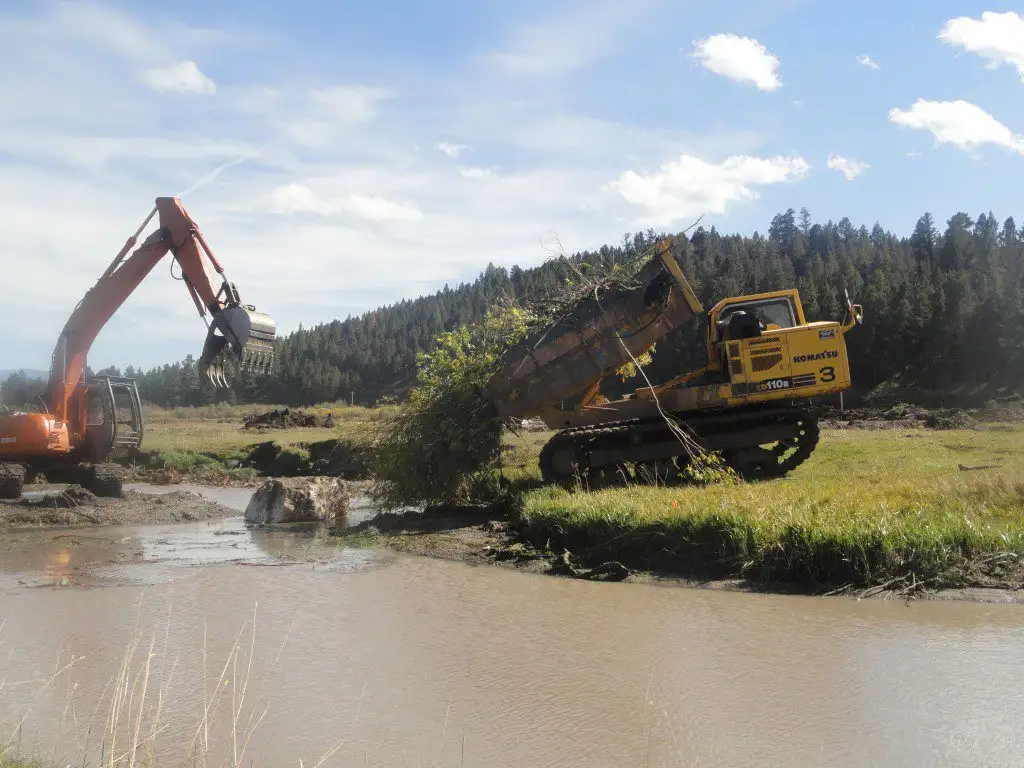
A placer-mined valley is a river turned inside out. The streambed sits in piles, the floodplain is gone, and the water threads through tailings in a channel no design ever intended. Putting that valley back together is heavy production earthwork and fine restoration craft at the same time, and very few crews do both.
Glacier Excavating has specialized in placer mining reclamation since 2016, excavating over 100,000 cubic yards each season at former placer mine sites in Idaho and Montana. That work has created over 100 acres of new floodplain and more than 25,000 lineal feet of new channel. We are a Rosgen-trained restoration contractor based in Eureka, Montana, and reclamation at this scale is now the core of our season.
What Is Placer Mining Reclamation?
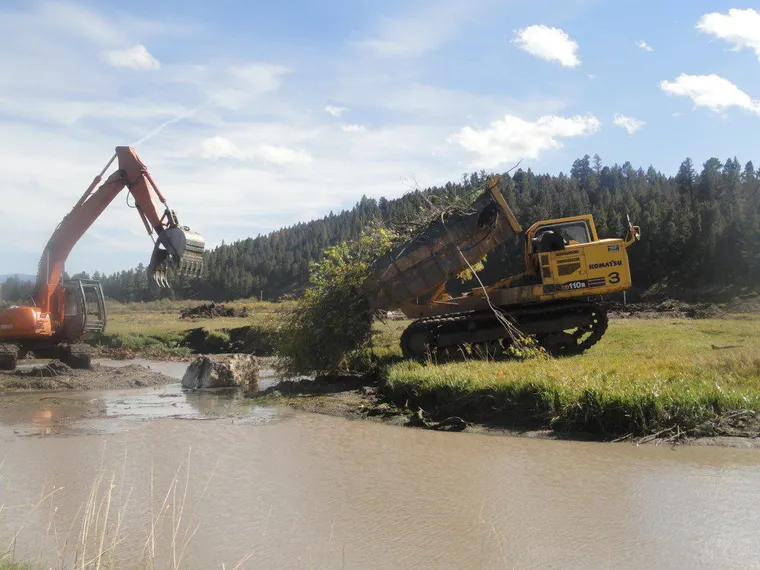
Placer mining reclamation is the reconstruction of stream valleys disturbed by historic placer mining: excavating and regrading tailings, rebuilding the floodplain surface, constructing a new channel, and revegetating the corridor. The goal is a functioning river system where mining left piles and pits.
Placer operations moved streambeds wholesale to wash gold from valley gravels. What they left behind is dredge tailings, disconnected water, and valleys that cannot support the fisheries they once carried. Reclamation designs reverse that damage, and contractors turn those designs into moved yardage and finished channel.
The scale separates this work from ordinary restoration. Reclamation sites run to hundreds of thousands of cubic yards, whole valley bottoms rebuilt from the tailings up, with a brand new channel and floodplain where none existed the season before.
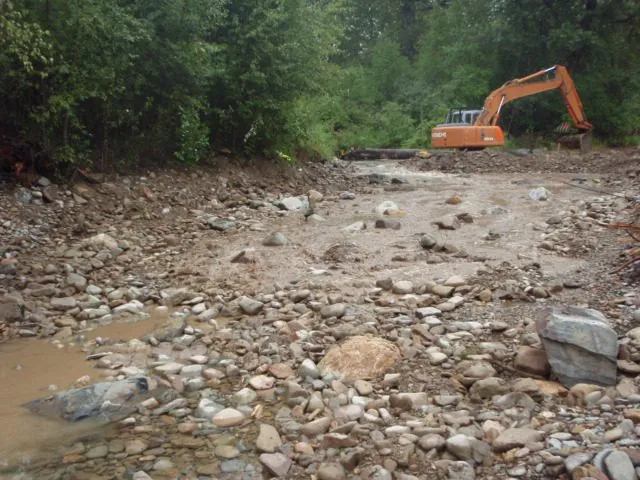
The damage being repaired is old. Placer and dredge operations worked Northern Rockies valleys from the 1860s into the mid-1900s, turning entire valley bottoms over to reach gold-bearing gravel. Dredges in particular left their signature everywhere they floated: rows of cobble tailings stacked in windrows, streams shoved into straight ditches, and topsoil buried under gravel. A century later those valleys look the same, because coarse tailings hold no water and grow almost nothing. Time does not fix a dredged valley. Machines fix it, guided by a design.
That is why reclamation funding has grown across Idaho and Montana: agencies, watershed groups, and conservation partners have learned that these valleys are recoverable, and that recovered valleys produce fish. Glacier’s role is the construction end of that partnership, and our project history includes work alongside the US Forest Service, Trout Unlimited, and state programs.
Problems Placer Reclamation Solves
Reclamation projects carry a century of accumulated damage. Construction solves it one valley at a time.
Buried and Displaced Stream Channels
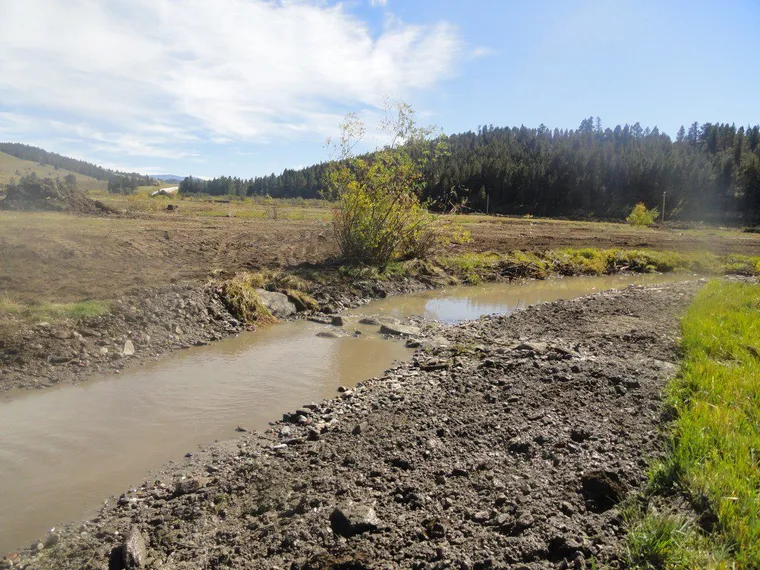
Mining pushed streams out of their beds and into ditches along the valley wall. We build new channels to engineered alignments, with the riffles, pools, and meanders the design specifies, then turn the water into them.
Valleys Without Floodplains
Tailings piles replaced the floodplain surface, so high flows have nowhere to spread. Our reclamation work has created over 100 acres of new floodplain, graded to design elevations and finished with microtopography that jump-starts vegetation.
Tailings as a Permanent Scar
Dredge tailings do not heal on their own; a century of waiting proves it. Production excavation puts that material where the design wants it, reshaping the valley bottom at a rate of more than 100,000 cubic yards a season.
Lost Fisheries in Mined Drainages
Mined reaches lose spawning gravel, cover, and connectivity. Reclamation rebuilds the physical habitat, pairing new channel with habitat structures so fish return to water that works.
Legacy Sites Under Cleanup Programs
Some reclamation happens inside larger mine cleanup efforts, where earthwork must coordinate with environmental requirements and multiple oversight parties. Our record includes work at the Upper Blackfoot Mining Complex, and our crews are used to building under that kind of oversight.
When a Project Calls for a Reclamation Contractor
The direct answer: when a mined valley has a restoration design and funding, and the quantities run serious. From there, the contractor question is about capability at scale.
Signs the Scope Needs Reclamation Experience
- Tailings excavation measured in tens or hundreds of thousands of cubic yards
- A new channel alignment through ground that has not held a stream in a century
- Floodplain construction at design elevations across whole valley segments
- Water management around active flows during mass excavation
- Restoration-grade finish standards applied at production scale
What the Bid Documents Should Nail Down
- Excavation, haul, and placement quantities with material assumptions
- Channel geometry, structure counts, and floodplain grading tolerances
- Diversion and dewatering requirements through construction seasons
- Revegetation scope and live material sources
- Sequencing across seasons where the project spans more than one
The Capability Question to Ask Any Bidder
Can the same crew move production yardage and finish a channel to restoration tolerances? Plenty of contractors can do one. Reclamation needs both in the same season, often in the same week, and that combination is exactly what Glacier built its placer specialty on.
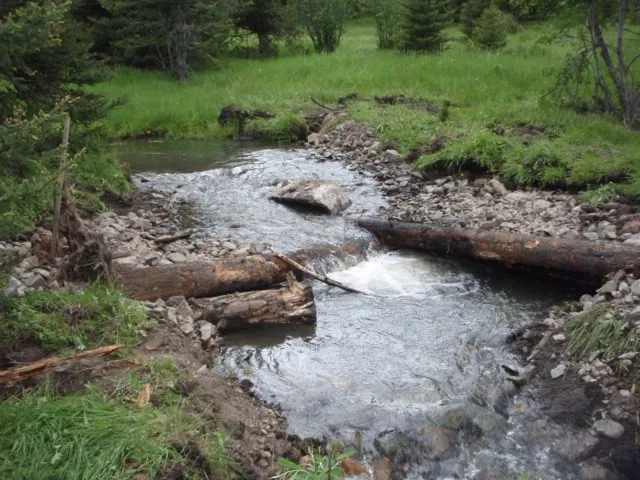
What Tailings Are and Why They Change the Work
Tailings are the washed leftovers of placer processing, and they behave like no other construction material. Understanding them explains most of what makes reclamation distinctive.
Coarse, Clean, and Thirsty
Processing washed the fines out, so classic dredge tailings are open cobble and gravel that drains instantly. Water disappears into them, which is why tailings piles stay barren and why reclamation designs rebuild finer floodplain material at the surface where plants and water can meet.
Sorted Into Layers the Design Can Use
Dredges sorted material as they worked: cobbles one place, gravels another, sometimes buried soil horizons underneath. Good reclamation designs use that sorting, placing coarse material deep, finer material high, and salvaged soils at the growing surface. Good construction keeps those materials separate through excavation and placement, which is a handling discipline, not an accident.
Sometimes More Than Rock
Some historic mining districts carry contamination alongside the tailings, and projects inside larger cleanup complexes come with environmental protocols attached. Where a project carries those requirements, we build to them exactly, coordinating with the oversight parties the way we have on complex-scale work like the Upper Blackfoot.
Placer Reclamation Capabilities We Deliver
Reclamation projects draw on every capability Glacier has, at the largest scale we work.
Production Tailings Excavation
Excavators, tracked trucks, dozers, and loaders moving 100,000+ cubic yards a season, run by operators with 15,000 to 25,000 hours of seat time. Production pace without production-site carelessness, because the finished product is habitat.
New Channel Construction
More than 25,000 lineal feet of new channel built at reclamation sites: shaped to design geometry, beds constructed, riffles placed, all of it covered in depth under our stream restoration service.
Floodplain Reconstruction
Valley-bottom grading to design elevations, finished with the microtopography treatment that holds moisture and catches seed. Over 100 acres of new floodplain built this way since 2016.
Habitat Structures in Reclaimed Reaches
New channels need grade control and cover from day one. We build the vanes, weirs, jams, and boulder structures the design calls for, drawing on a record of 2,500+ structures.
Revegetation at Scale
Sod mats, willow clusters, and transplanted live material, harvested and placed by our own crew, give reclaimed valleys living cover in the first season instead of the fifth.
Water Management Through the Build
Diversions and dewatering keep live water clean while the valley around it is rebuilt. Erosion control runs throughout, and fish rescue is coordinated wherever dewatering requires it.
Our Placer Reclamation Process
Reclamation runs on sequencing. Here is how Glacier takes a mined valley from tailings to functioning river corridor.
Project and Quantity Review
Bob reviews the design, quantities, and haul logic against the site itself. At reclamation scale, small assumptions multiply, so we resolve material questions with your team before the bid is final, and layout questions before equipment mobilizes.
Water First
Every project begins with a dewatering and diversion plan. At mine sites that means managing live water through multiple construction seasons while excavation happens around it.
Mass Excavation and Placement
Tailings move on planned haul routes at production pace. Staging areas and equipment paths are set for the least disturbance to whatever existing vegetation the valley still holds, because every mature plant we save is a head start.
Valley and Channel Construction
Floodplain grades come to elevation, the new channel takes shape, structures go in, and GPS grade control keeps all of it inside tolerance. Rough shaping and finish work each have lead operators; that split is how quality survives production pace.
Finish, Revegetation, and Turn-In
Microtopography, live material, and erosion control finish the valley. Then the water is turned into its new channel, which is the moment the whole project was built for.
Turning the water deserves its own paragraph, because it is the highest-stakes hour of a reclamation project. The new channel gets its final inspection dry. Diversions come out in a planned order, flow enters the new alignment in stages, and the crew watches every riffle and structure take its first load with equipment standing by. Fish rescue happens on the old channel as it dewaters. Done right, the river is running its new course by evening and the old ditch is already being reclaimed behind it. We have made that transfer at reclamation sites across two states, and it never stops being the best day of the season.
Multi-Season Coordination
Large reclamation runs across seasons. We fulfill each season’s contract obligations on schedule and to the documents, and we coordinate winter shutdown and spring startup with your oversight team.
How a Reclaimed Valley Comes Back
Owners funding reclamation deserve to know what the years after construction look like, because the payoff compounds.
The First Season
Water runs the new channel, riffles seat themselves, and the first high flow proves the grade work. Willow clusters leaf out, sod mats knit, and the floodplain’s microtopography starts holding moisture where seed can use it. A well-built site looks rough and raw this year, and it is supposed to.
Years Two Through Five
Vegetation takes the site over. Banks green up through the structures, the floodplain carries its first overbank flows and drops fresh fines into the roughness, and fish move into water that did not exist as habitat before construction. This is the window where monitoring teams watch performance standards come true.
The Long Run
A reclaimed valley matures into a stream corridor that no longer reads as constructed. The floodplain functions, the channel maintains itself by doing river work, and the tailings era survives only in photographs. More than 25,000 feet of channel and 100 acres of floodplain we have built are on that trajectory right now across Idaho and Montana, and adding to that number is what our placer season is for.
Why Choose Glacier Excavating for Placer Reclamation
Because this is our specialty at its largest, and the record backs it.
The Numbers Since 2016
Over 100,000 cubic yards excavated each season. Over 500,000 cubic yards moved in total. Over 100 acres of new floodplain. More than 25,000 lineal feet of new channel at former placer mine sites in Idaho and Montana.
Restoration Standards at Production Scale
The crew that moves the yardage is the same Rosgen-trained crew that finishes channels to restoration tolerances. Nothing gets handed off between a dirt contractor and a finish contractor, because we are both.
Proven in Mining Complexes
Our project record includes the Upper Blackfoot Mining Complex and placer sites across Idaho and Montana. The full list is on our Projects page.
A Crew Built for Long Projects
Key personnel have worked together for years: Bob coordinating with oversight teams, Blaine and Ed leading operations, Trevor and John Grieve on the iron, Marriah running submittals and compliance from the office. Multi-season projects reward that stability. Meet them on our About page.
Environmental Care Under Heavy Iron
Erosion control throughout, water quality protected, equipment paths planned. The 2015 Montana AFS award on Bob’s wall came from fisheries professionals watching how this company treats water while moving serious yardage.
Insured and Accountable
Licensed, bonded, and insured up to $1,000,000, with clean submittals and compliance reporting on every project.
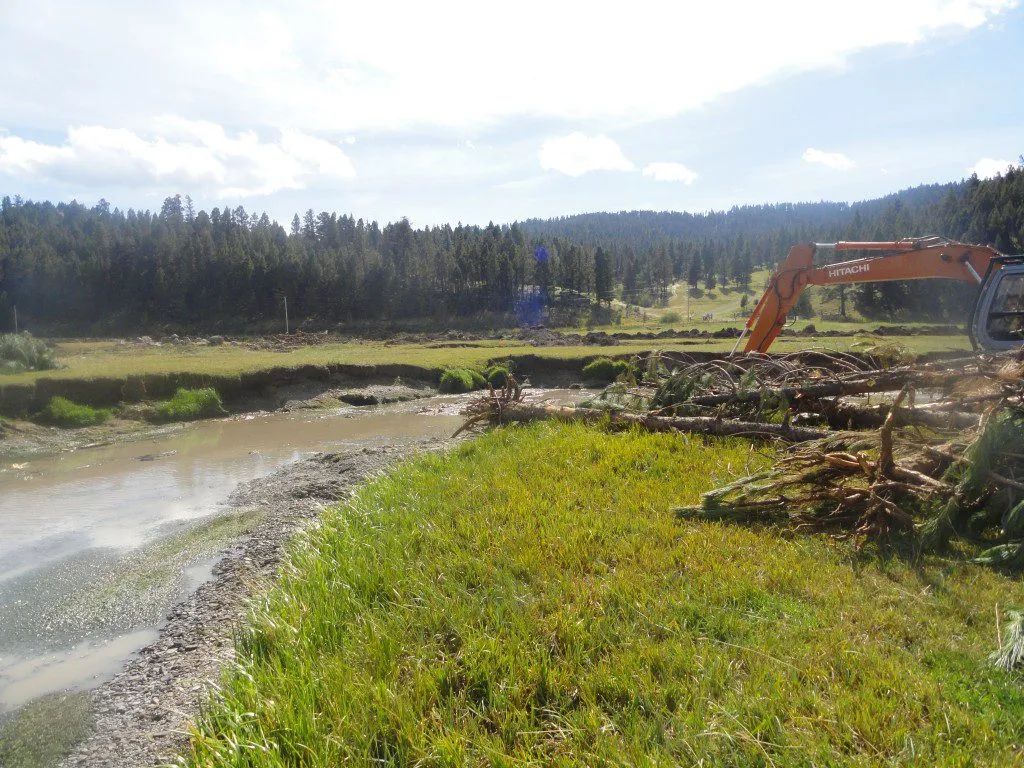
The Equipment Behind Reclamation Production
Moving 100,000 yards a season through a valley bottom takes a fleet built for exactly that. Glacier runs its own excavators, dozers, tracked trucks, dump trucks, front end loaders, and skid steers, sized and crewed for reclamation production.
The tracked trucks are the quiet backbone of mine-site work. Tailings valleys have no haul roads worth the name, and tracked haulers move material across soft, rough ground at production pace without building and maintaining a road network first. Excavators load and shape, dozers carry the floodplain grades, and the loaders keep staging and material separation moving.
Production equipment runs under restoration rules here. GPS grade control keeps valley surfaces on design. Water discipline holds even when the water is a diversion channel you built yourself. And finish machines follow the production machines closely, so the valley behind the operation is already becoming habitat while the excavation front is still moving downstream.
Understanding Placer Reclamation Costs and Bidding
Straight answer: reclamation pricing is quantity-driven. Excavation, haul, placement, channel stationing, and structures each carry unit costs, and the site’s haul distances and water conditions move those numbers more than anything else.
Factors That Drive Reclamation Costs
Total yardage and haul distance: the production backbone of the price. Material behavior: clean gravels and silty tailings load and place differently. Water management: how much live water runs through the site during construction. Channel and structure scope: stationing, geometry, and structure counts. Revegetation scope: acres of live material and finish. Season count: multi-season projects carry mobilization and winterization cycles.
Why Reclamation Bids Spread So Wide
Bidders without reclamation experience either pad the unknowns or miss them. A crew that has moved half a million yards at mine sites prices from production records instead of guesses, which protects both the owner’s budget and the schedule.
What a Complete Reclamation Bid Package Includes
Reclamation bids sharpen fast when the package includes: excavation and placement quantities by reach, the channel plan and profile with structure schedules, material handling and separation requirements, water management expectations by season, revegetation scope, haul route and staging constraints, and any environmental protocols that apply. At these quantities, a vague assumption in the documents becomes a six-figure spread between bidders.
How Glacier Bids Reclamation Work
Send the design, quantities, and bid schedule through our contact page. Bob prices reclamation from our own season records, walks the site where the scope warrants it, and tells you straight whether the construction window fits the quantities.