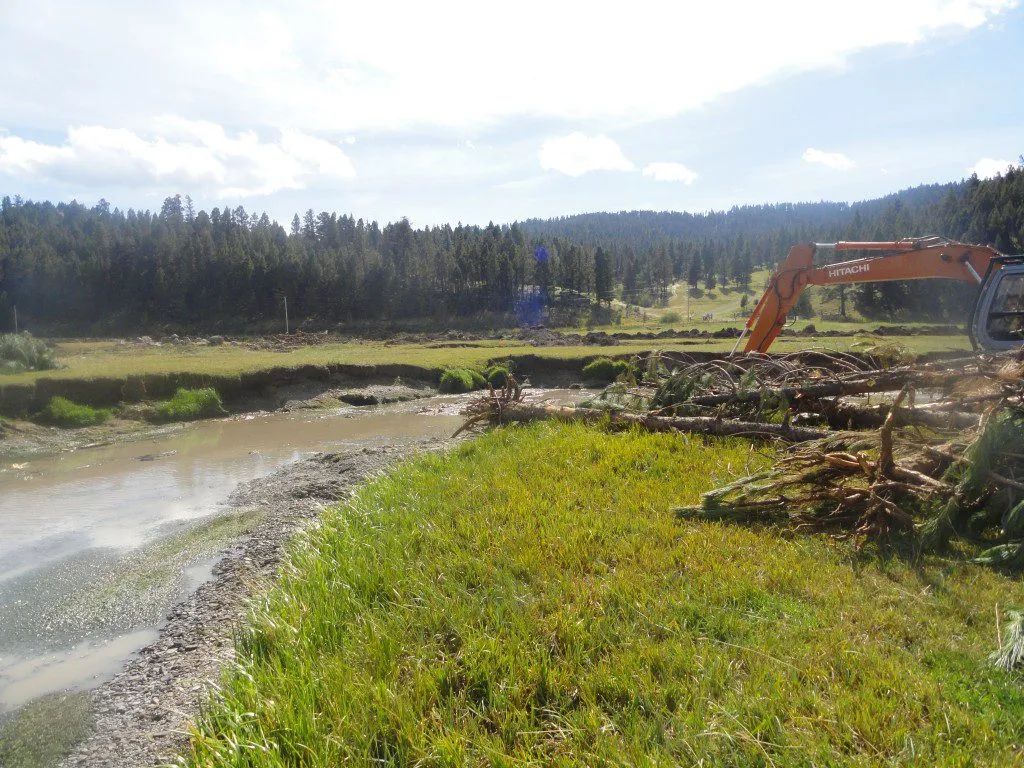
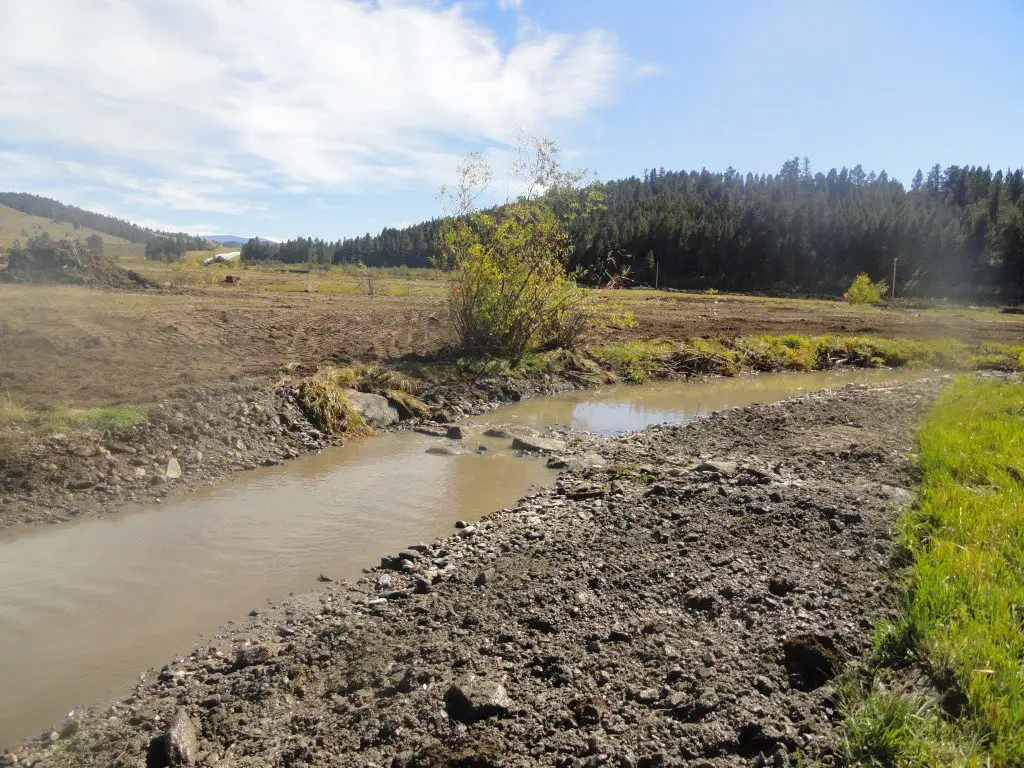
Your restoration design deserves a contractor who can read it. Glacier Excavating has built stream restoration projects to engineered specifications since 2004, and the work has to hold through the first runoff and every one after it. A channel that fails inspection costs you time, money, and permits. One that holds protects your design, your budget, and the water itself.
Glacier Excavating is a stream restoration contractor based in Eureka, Montana, working across Montana, Wyoming, Idaho, Washington, and Oregon. Our operators train in Wildland Hydrology and Rosgen stream restoration techniques, carry tens of thousands of hours of in-stream equipment time, and have constructed more than 70,000 lineal feet of restored channel. Engineers, agencies, and project owners hand us contract documents. We build what the documents say, on schedule, with erosion control protecting water quality the whole way through.
What Is Stream Restoration Construction?
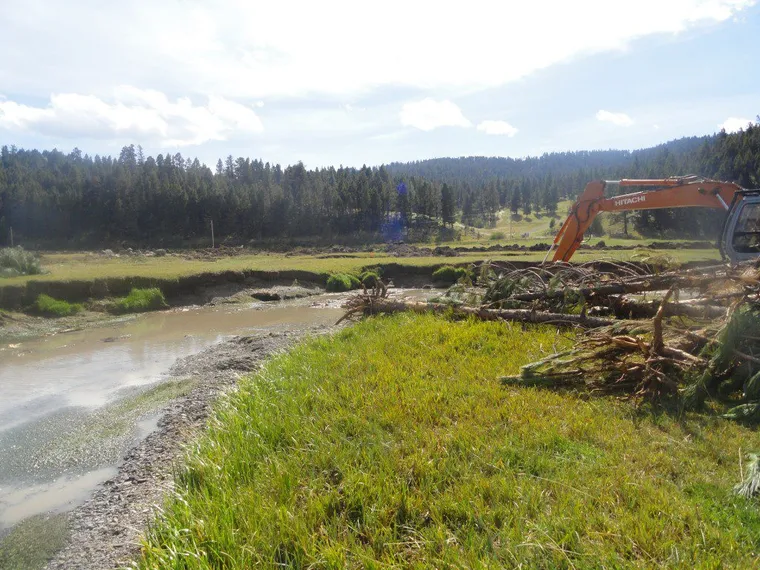
Stream restoration construction is the earthwork that turns an engineered river design into a functioning channel: shaping the streambed, building the floodplain, and installing the structures and vegetation that keep both stable. The design comes from hydrologists and engineers. The construction crew makes it real in the water, to the lines and grades on the plan sheets.
Restoration projects exist because a stream has been straightened, incised, mined, or cut off from its floodplain. Fixing that takes machines working in and beside live water, guided by operators who understand why the design calls for a riffle here and a meander there. That understanding is the difference between dirt work and restoration work.
Built correctly, a restored reach stabilizes quickly and permanently. Vegetation takes hold, the channel carries its design flows, fish habitat functions, and the project closes out clean with your oversight team.
Most modern restoration designs in the Northern Rockies come out of the natural channel design tradition that Dave Rosgen’s stream classification work established. A design might call for a meandering gravel-bed channel with a defined width-to-depth ratio, riffle spacing tied to channel width, and floodplain benches at specific flood elevations. Those parameters are not decoration. Each one controls how the stream moves water and sediment, and each one has to survive the trip from the plan sheet to the excavator bucket.
That trip is the contractor’s whole job. The plans define alignment, profile, cross sections, structure details, and material gradations. The crew has to hold all of them at once, in flowing water, on a schedule set by permit work windows. Glacier’s operators trained under the people who built this discipline, including instruction from Dave Rosgen of Wildland Hydrology and years of project work alongside the region’s river design firms.
Problems Stream Restoration Construction Solves
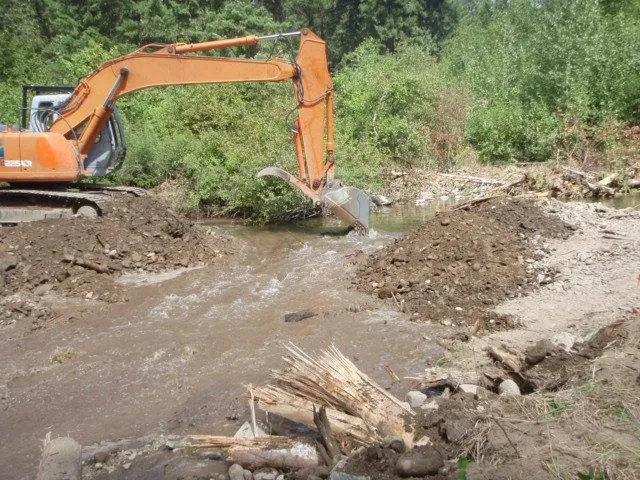
A restoration build done right solves the problems that put the project out to bid in the first place. These are the ones our clients bring us most.
Incised and Disconnected Channels
An incised channel drops its bed until flood flows can no longer reach the floodplain. We reconstruct bed elevation with constructed riffles and grade control, and rebuild the floodplain surface so the stream spreads out and slows down the way the design intends.
Failing, Eroding Streambanks
An eroding bank loads the stream with sediment and eats the land beside it. Channel shaping paired with bank stabilization structures puts the bank back at a stable angle and armors it with wood, rock, and living vegetation instead of raw riprap alone.
Straightened and Channelized Reaches
A straightened stream moves too much energy too fast. We build the meanders, riffles, and pools the design lays out, returning length and complexity to the reach so it dissipates energy the way a natural channel does.
Lost Fish and Wildlife Habitat
A degraded channel loses the pools, cover, and clean gravel that fish need. Toe wood, woody structure, and constructed riffles rebuild that habitat as a working part of the channel, which is why our crews coordinate fish rescue during dewatering rather than treating habitat as an afterthought.
Legacy Mining and Land-Use Damage
Some reaches were buried, relocated, or stripped by placer mining and old land practices. Our placer mining reclamation work has created new channel and floodplain at former mine sites in Idaho and Montana, returning streams to valleys that lost them decades ago.
When a Project Calls for a Stream Restoration Contractor
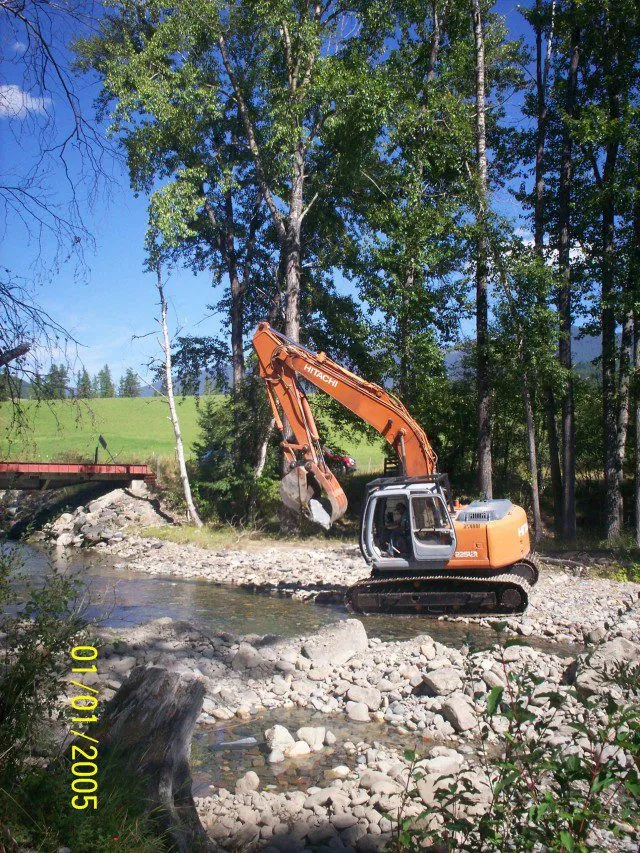
The clearest sign is simple: the plans call for in-stream construction. If your project includes any of the conditions below, the contractor you select needs real restoration experience, because general earthwork habits fail in live water.
Conditions That Call for Restoration Experience
- Work below the ordinary high water mark under a 404 permit or state authorization
- A design that specifies channel geometry, riffle spacing, or floodplain elevations
- Dewatering and stream diversion required to build in the dry
- Habitat structures, toe wood, or vegetated treatments in the contract documents
- Fish presence that requires rescue and exclusion during construction
What Oversight Teams Should Expect From the Contractor
- A dewatering and diversion plan before mobilization, coordinated with your inspectors
- Staging areas and equipment paths planned to protect existing vegetation and soils
- Erosion control installed and maintained through the entire build
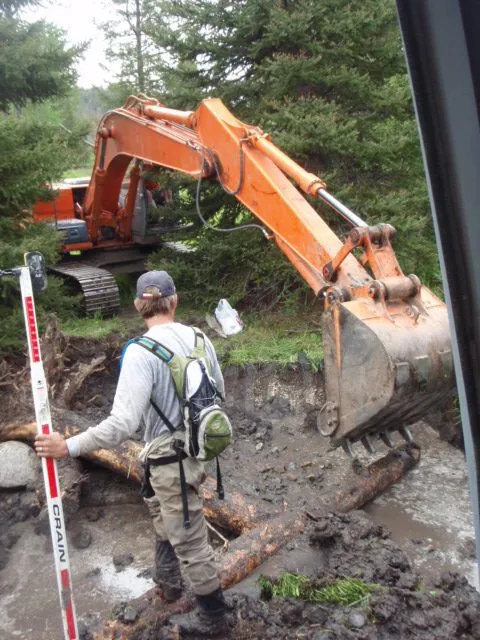
- Operators who can hold design grade in a channel bottom, verified with GPS
- Daily coordination with the project representative, and documentation for progress measurement
When to Bring the Contractor In
Early. A constructability review before final design saves change orders during construction. Bob Cuffe has coordinated stream projects with oversight personnel and project representatives for more than two decades, and the smoothest projects are the ones where those conversations start before the bid date.
Questions Worth Settling Before Bid Day
A clean bid depends on a clean scope. These are the questions we most often see left open, and every one of them moves money:
- Who supplies rock, logs, and root wads, and from where?
- What are the permitted in-stream work windows, and do they fit the quantities?
- Where can the contractor stage, and what access improvements are allowed?
- Who runs fish rescue, and under whose authorization?
- How will grade be verified during construction, and by whom?
- What happens to excess material, and who owns the haul?
If your documents answer all six, your bids will come back tight and comparable. If they do not, we will flag it when we review the package, because surprises priced during construction cost more than questions answered before it.
Stream Restoration Capabilities We Build
Glacier builds the full range of treatments that engineered restoration designs specify. Each one below comes from our actual project record, and several appear together on almost every job.
Channel Shaping and Constructed Streambed
We cut and shape new channel to design lines and grades, including bed material placement sized to the design. Rough shaping, grade verification, and finish work each have a lead operator, which is how a reach ends up matching the plan and profile sheets.
Constructed Riffles
A constructed riffle sets bed elevation, controls grade, and oxygenates flow. We place and shape riffle material to the specified gradation and profile so the structure holds at design flows and functions as habitat.
Floodplain Construction and Microtopography
We build floodplain surfaces at the elevations the design calls for, then finish them with microtopography treatment: the low swales and rough surface texture that hold water, catch seed, and speed revegetation.
Vegetative Soil Lifts
A soil lift is a living bank: soil wrapped in fabric, layered with cuttings, built up the bank face. We install soil lifts where the design uses vegetation as structure, giving the bank immediate strength that grows stronger as roots take over.
Toe Wood, Fascines, and Vegetated Wood Matrix
Wood at the bank toe protects the bank where the stream works hardest and gives fish overhead cover. We build vegetated wood and brush fascine treatments and toe wood assemblies to spec, tying them into the bank so they stay put.
Interior Culvert Stream Work
Where a stream runs through a culvert, we build the interior streambed so fish can pass and the channel functions through the crossing. It is close-quarters work that rewards operators with thousands of hours of precise bucket control.
Sod Mats and Willow Clusters
We harvest sod mats and willow clusters on site and place them as living surface on new banks and floodplains. Transplanted live material establishes faster than seed alone and is often the reason a project looks finished a season early.
Materials Restoration Designs Build With
Restoration materials do the work long after the equipment leaves, and each has a job the others cannot do. Designs mix all three, and construction has to handle each correctly.
Wood
Logs, root wads, and brush provide roughness, cover, and bank strength that rock cannot match, and wood is often available on or near the site. It has to be sized, keyed, and ballasted correctly or the first flood takes it. We harvest, handle, and place wood to the detail sheets, including whole-tree material with root fans intact.
Rock
Boulders and engineered gradations carry the loads wood cannot: grade control sills, vane arms, footer courses, and riffle material sized to stay put at design flows. Placement is precise work. A footer set high changes how the whole structure drives flow.
Living Plants
Sod mats, willow clusters, cuttings, and soil lifts are the only material that gets stronger every year. Harvesting local live material and placing it while it is viable takes crew care and timing, and it is the reason restored banks look established seasons ahead of seeded ones.
Our Stream Restoration Construction Process
Every Glacier project follows the same sequence, because the sequence is what protects the water. Here is what your project looks like from award to closeout.
Project Review and Coordination
We start by walking the design with your team. Bob coordinates directly with oversight personnel and project representatives to confirm permits, access routes, and how the design lays onto existing conditions, and to flag any layout questions before equipment arrives.
Dewatering and Diversion Planning
Every project begins with a dewatering plan. We establish how the stream will be diverted, where water goes, and how the work area stays dry, and we coordinate fish rescue with the appropriate personnel during diversion and dewatering.
Staging and Access With Least Disturbance
We identify staging areas and the paths of least disturbance before the first track hits the ground. Equipment routes are planned to minimize disturbance to existing vegetation and soils, because everything we protect now is stabilization we do not have to build later.
Channel and Floodplain Construction
Rough shaping, structure placement, and grade control proceed in the design’s sequence. Each experienced operator has a specialty, from rough channel shaping through structure construction, and GPS-guided grade keeps the built work matching the drawings.
Finish Work and Revegetation
Finish shaping, microtopography, soil lifts, sod mats, and willow placement close the loop between earthwork and a living system. The goal on every restoration is to reduce construction impact and maximize the potential for permanent, rapid stabilization.
Inspection and Closeout
We fulfill contract obligations on time and in line with the contract documents, and we finish with your inspectors, not ahead of them. Documentation for progress measurement is part of the job, handled by people who have done it for years.
A note on what live water demands, because it shapes every step above. In-stream construction has no undo. Turbidity, fuel handling, equipment crossings, and the timing of every diversion are managed decisions, made by people who know what a mistake costs a fishery. Our crews plan equipment fueling and containment away from the water, cross at designated points, and treat the work window as a hard boundary. Twenty years of building in trout streams without losing the trust of the fisheries community is not luck. It is procedure, held every day, on every reach.
Why Choose Glacier Excavating for Stream Restoration
The direct answer: this is what we do, and we have specialized in it for more than two decades. A few specifics behind that.
Rosgen-Trained Operators
Our crew trains in Wildland Hydrology and Rosgen stream restoration techniques, from Bob’s Level I and Level II coursework to Rosgen Level I training for our foremen and operators. We speak the same language as your design and oversight team.
Tens of Thousands of Hours In-Stream
Blaine Hubbard carries around 14,000 hours of in-stream time. Ed Schmit carries around 25,000 hours of operator experience. Bob adds 15,000 in-stream hours of his own. Hours like these are why the work matches the drawings. Meet the whole crew on our About page.
70,000+ Lineal Feet Built
Glacier has constructed more than 70,000 lineal feet of stream restoration across the Northern Rockies, including Rock Creek, Upper Ninemile Creek, the Tobacco River, and the Upper Blackfoot Mining Complex. See the record on our Projects page.
Trained for Compliance
Blaine and Trevor are certified SWPPP preparers and administrators, and storm water management training runs through the crew. Erosion control is not a line item we resent. It is how we build.
An Award on the Wall
The Montana Chapter of the American Fisheries Society presented Bob with its 2015 Outstanding Individual Award for his contribution to the protection and enhancement of fisheries resources in Montana. Fisheries professionals gave a contractor that award. That should tell you how we work.
Insured and Accountable
Glacier Excavating is licensed, bonded, and insured up to $1,000,000. Marriah Miller, our office manager since 2014, handles submittals, insurance documents, and compliance reporting, so your paperwork arrives complete and on time.
The Equipment Behind the Work
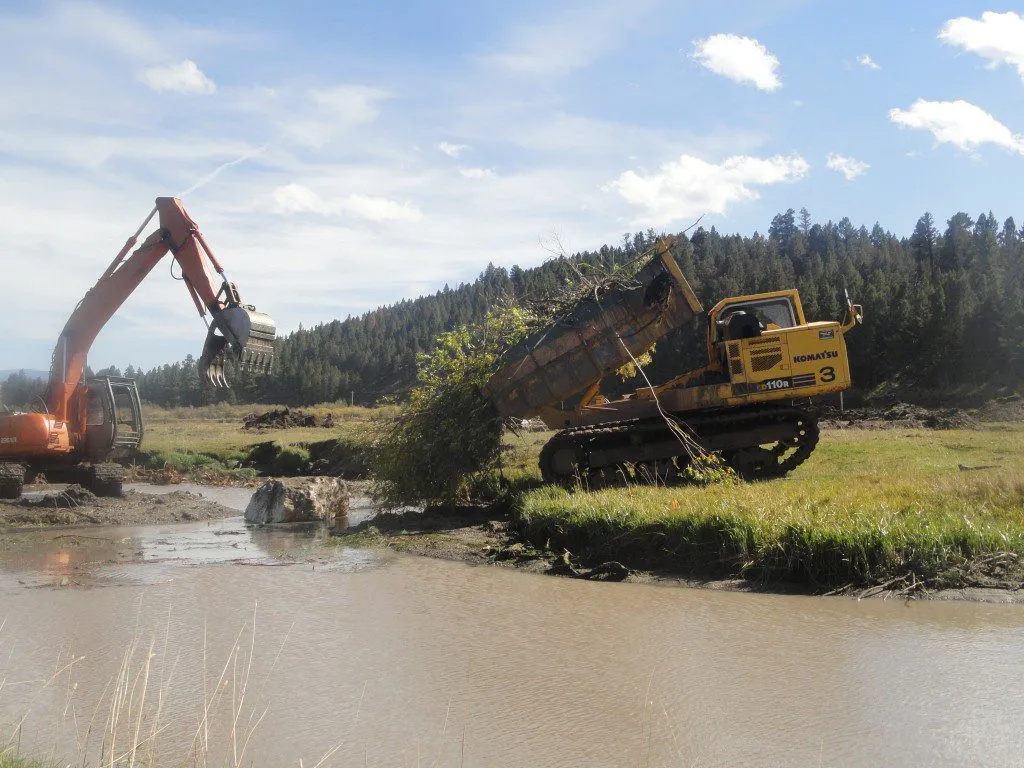
Restoration quality rides on matching machines to river work, and on operators who treat the bucket as a finish tool. Glacier fields its own fleet: excavators for channel shaping and structure placement, dozers for floodplain grading, tracked trucks that carry material across soft ground a highway truck would destroy, front end loaders and skid steers for material handling and staging.
Three things about how we run that iron matter to your project. First, GPS grade control ties the machines to your design surfaces, so the grade the operator cuts is the grade the drawing shows. Second, our operators are specialists: rough shaping, structure setting, and finish work are different skills, and each has a lead. Third, equipment discipline near water is absolute. Fueling and maintenance happen away from the channel, crossings happen at designated points, and a machine that touches the water does it because the work plan said so, never because it was convenient.
The result reads in the finished reach. Channels shaped by restoration specialists look like the river grew there, which is the entire point.
Understanding Stream Restoration Project Costs and Bidding
Honest answer first: restoration costs vary too much by site for a useful blanket number, and we price by the project documents, never by the acre. Here is what actually drives the numbers.
Factors That Drive Restoration Construction Costs
Access and staging: how far material and machines travel to reach the water. Dewatering scope: diverting a small creek and a large river are different projects. Structure count and type: wood and rock structures each carry their own supply and placement costs. Material sources: on-site harvest versus imported rock and wood. Revegetation scope: soil lifts, sod mats, and willow work take crew time that pays back in stabilization. Season and flow windows: permitted work windows compress schedules and shape sequencing.
Why Bids Differ Between Contractors
A low bid from a contractor who has never dewatered a stream is not the same number as a bid from a crew that has done it for twenty years. Change orders, failed inspections, and rebuilt structures live in the gap between those two numbers. We bid from experience, and we tell you straight what a scope will take.
What a Complete Bid Package Includes
The best restoration bids come off complete packages: plans with alignment and profile, typical and detail sheets for every structure type, technical specifications, a bid schedule with quantities, permit conditions, and any geotechnical or material source information the design team holds. Send all of it. A contractor pricing from partial documents pads the gaps, and you pay for the padding whether the risk shows up or not.
How Glacier Bids Your Project
Send the plans, specifications, and bid schedule to our contact page or call the office. Bob reviews the documents personally, walks the site when the project warrants it, and returns a bid built line by line from the contract documents. If we are not the right crew for the job, we will tell you that too.