
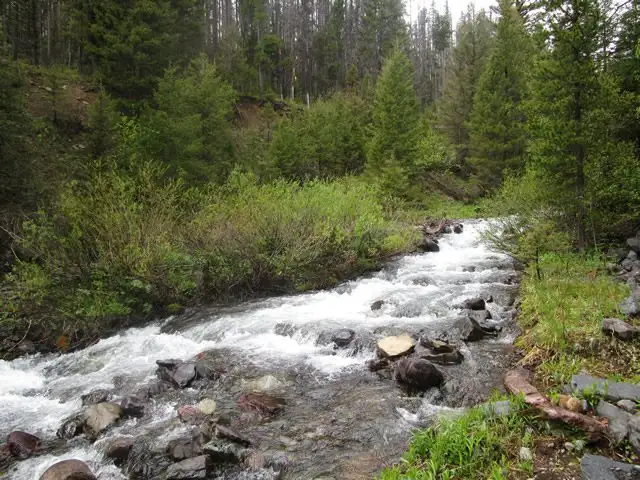
A failing streambank does not wait for a convenient construction season. Every high flow takes more land, loads more sediment, and moves the problem downstream. The fix is not a wall of riprap. It is engineered structure, built by a crew that has done it thousands of times.
Glacier Excavating has constructed over 2,500 bank stabilization and habitat structures to engineered specifications across the Northern Rockies. We are a stream restoration contractor based in Eureka, Montana, working in Montana, Wyoming, Idaho, Washington, and Oregon since 2004. Our operators are Rosgen-trained, carry tens of thousands of hours of in-stream time, and build structures that hold the bank while protecting the fish that live against it.
What Is Bank Stabilization?
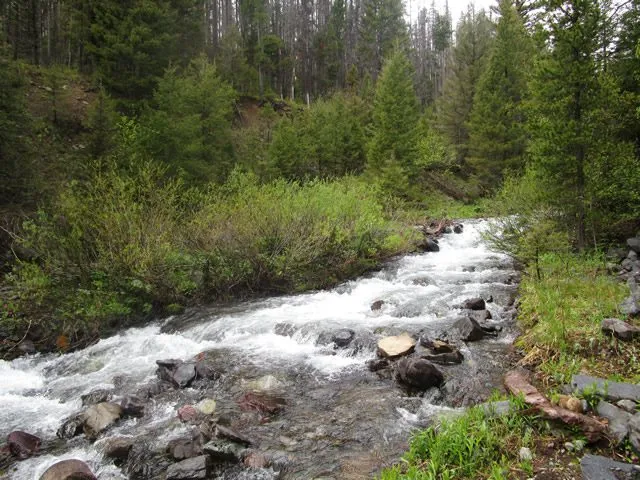
Bank stabilization is the construction of structures and treatments that stop a streambank from eroding while keeping the channel functioning as habitat. Modern designs use wood, rock, and living vegetation arranged to redirect flow energy away from the bank, rather than simply armoring the bank face.
Project owners specify bank stabilization when erosion threatens roads, bridges, property, water quality, or a restoration investment upstream. The structures do double duty. A log vane that turns flow away from the bank also scours a pool that holds trout. That pairing of stability and habitat is the whole discipline.
Done to spec, stabilization work disappears into the stream within a few seasons. Vegetation grows through it, the bank holds its line, and the structures keep working under water where nobody sees them.
The physics is worth understanding, because it explains why structure geometry matters so much. A stream attacks its bank hardest on the outside of bends, where flow velocity concentrates. Hard armor absorbs that attack and reflects the energy downstream to the next unprotected bank. A vane or J-hook does something smarter: it redirects the current toward the channel center before it reaches the bank, so the energy spends itself digging a pool instead of eating land.
That redirection only happens if the structure sits at the designed angle and elevation. Built a few degrees flat or a foot high, the same rocks and logs stop steering the river and start irritating it. This is why structure counts alone say nothing about a contractor. Placement tolerance is the skill, and it is why engineers ask who is running the excavator.
Problems Bank Stabilization Structures Solve
Bank structures earn their place by solving specific failure modes. These are the ones our clients’ designs address most often.
Active Bank Erosion and Land Loss
An eroding bank retreats every year it goes untreated. Vanes, J-hooks, and toe protection redirect the energy that drives the erosion, stopping the retreat at the line the design sets.
Sediment Loading and Water Quality
A raw, calving bank feeds sediment into the stream with every flow. Stabilizing the bank cuts that load at the source, which protects water quality, spawning gravel, and downstream infrastructure all at once.
Lost Pool Habitat and Cover
Degraded reaches run shallow and featureless. Cross vanes and woody debris jams concentrate flow, scour pools, and put overhead cover back where fish need it. Habitat is built into the structure, never bolted on after.
Grade Instability and Headcuts
A headcut migrating upstream can unravel a whole reach. Boulder grade controls and step pools lock the bed elevation in place and step the stream down gradually instead of letting it cut.
Infrastructure at Risk
Roads, bridge abutments, and utility crossings sit close to moving water. Engineered structures protect them without turning the stream into a ditch, which keeps both the asset and the permit conditions satisfied.
When a Project Calls for Engineered Bank Structures
The direct answer: when the design says so, and the designs say so for good reasons. Bank structures belong in a project when the conditions below are on the table.
Site Conditions That Call for Structures
- Outside meander bends working against roads, property, or restoration work
- Banks too tall or too steep to regrade within the available corridor
- Reaches where habitat requirements rule out hard armor alone
- Grade instability, headcuts, or bed degradation moving through the reach
- Permit conditions that require habitat value in the treatment
What Belongs in the Contract Documents
- Structure type, count, spacing, and stationing
- Material specifications for logs, root wads, boulders, and fill
- Elevation and orientation tolerances for each structure
- Dewatering, fish rescue, and erosion control requirements
- Revegetation and bank treatment above the structures
Why Structure Experience Matters at Bid Time
A cross vane is a precise thing. The arm angles, the throat elevation, and the footer depth decide whether it directs flow or becomes a maintenance problem. Glacier foreman Blaine Hubbard has constructed hundreds of these structures, and that experience is what your bid buys.
Which Structure Solves Which Problem
Designers choose structures for reasons, and knowing the logic helps owners read their own plans. The rough map runs like this:
- Outside bend attacking the bank: log vanes or J-hooks to redirect flow off the bank
- Bed dropping or a headcut moving upstream: boulder grade controls or cross vanes to lock grade
- Shallow, featureless reach needing habitat: woody debris jams and vane-scoured pools
- Steep reach carrying too much energy: log step pools to burn gradient in controlled drops
- Whole channel widening and losing definition: cross vanes to refocus flow to the center
The design team makes the final call from survey and hydraulic analysis. Our job is building their answer inside tolerance, and flagging it in the field if conditions contradict the drawing.
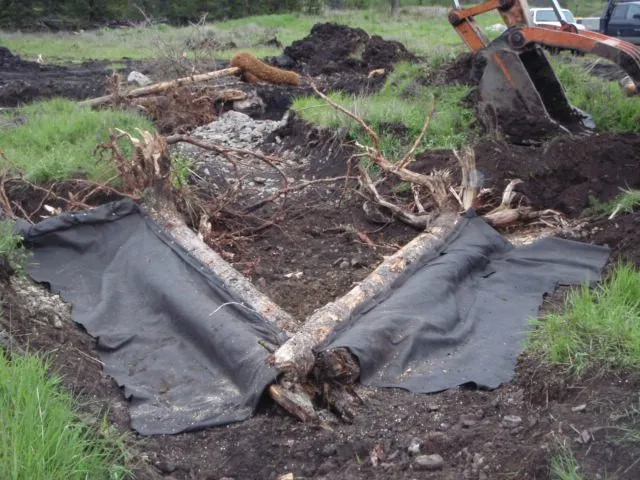
Bank Stabilization Structures We Build
Glacier has built every structure type below at production scale. Over 2,500 of them, on projects from Rock Creek to the Tobacco River. See where on our Projects page.
Log Vanes and Step Pools
A log vane angles upstream from the bank, turning flow toward the channel center and scouring a pool off its tip. In steeper reaches, log step pools carry grade in controlled drops that fish can pass.
Woody Debris Jams
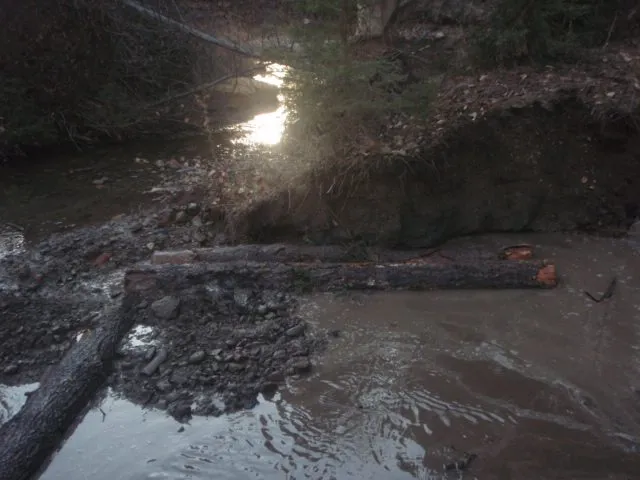
Engineered debris jams put the wood back that historic streams carried naturally. Root wads, logs, and racked material create cover, slow flood energy, and hold the bank they anchor into. A well-built jam is dense, keyed deep into the bank, and ballasted against flotation, so it tightens under flood load instead of shedding pieces. Blaine and the crew have built them across the Northern Rockies, and the racked debris that collects afterward is the structure doing its job.
Log and Rock Cross Vanes and Weirs
A cross vane spans the channel with arms angling upstream to a low center throat. It holds grade, protects both banks, and focuses flow into a center pool. We build them in log, rock, and combinations to match the design.
J-Hooks
A J-hook extends a vane with a curved rock tip that peels flow off the bank and drops it into a scour pool. It is one of the workhorse structures of natural channel design, and we have placed them by the hundred.
Boulder Grade Controls
Grade control structures lock bed elevation with keyed-in boulder placements. They stop headcuts, hold riffle crests, and set the foundation elevations that the rest of the reach depends on.
Vegetated Treatments Above the Toe
Structures protect the toe. Above them, we build vegetated soil lifts, brush fascines, and toe wood so the upper bank knits together with living material. The full range is covered under our stream restoration capabilities.
Materials That Go Into Bank Structures
Structure materials split three ways, and most designs use all of them together.
Structural Wood
Logs and root wads carry structure loads while creating the cover fish actually use. Wood must be sized to the detail sheets, keyed into the bank far enough to hold, and ballasted so buoyancy never wins. Root fans placed facing upstream rack debris naturally and build the jam’s density over time.
Rock and Boulder
Footers, vane arms, sills, and grade controls run on rock: sized by the design, placed piece by piece, keyed against scour. Footer depth is the quiet hero of structure longevity. Scour reaches deeper than intuition suggests, and the footer has to already be there when it does.
Live Material
Willow, sod, and cuttings woven into and above structures turn a built bank into a living one. Roots take over the job as wood ages, which is the design intent: the structure holds the bank long enough for the vegetation to hold it forever.
Our Bank Stabilization Construction Process
Structure work follows the same discipline as every Glacier project: plan the water first, protect what exists, build to the documents.
Design and Site Review
We walk the design against the real bank with your team. Structure locations drawn in an office sometimes meet a boulder or a buried log in the field, and it is cheaper to resolve that before mobilization. Bob coordinates layout confirmation with your oversight personnel directly.
Dewatering and Fish Rescue
Every project starts with a dewatering plan. Structure excavations happen in the dry, behind diversions, with fish rescue coordinated during dewatering. That protects the fishery and gives our operators clean conditions to hit footer depths.
Material Staging
Logs, root wads, and boulders are staged along planned equipment paths chosen for the least disturbance to vegetation and soils. Material handling is half of structure work, and staging right is why the build stays on schedule.
Structure Construction
Footers go to depth, arms go to angle, throats go to elevation. GPS-guided grade control and operators with thousands of hours of structure time keep every placement inside tolerance. Each experienced operator has a specialty, and structures are Blaine’s.
Bank Treatment and Finish
Above the structures we complete the bank treatments the design calls for, tie in vegetation, and finish the site so stabilization starts immediately. Erosion control stays in place and maintained until the site is stable.
Inspection and Documentation
We build with your inspectors, provide documentation for progress measurement, and close out in accordance with the contract documents. On time is part of the spec as far as we are concerned.
One process note that separates structure crews: sequencing against the water. Structures on a reach are not built in whatever order is convenient. Grade controls set foundation elevations that upstream structures depend on, diversions have to move as work progresses, and a half-built structure left over a high-flow weekend is a liability. We sequence structure work so every evening leaves the reach in a condition that can take water, because in the Northern Rockies a thunderstorm does not check the construction schedule. That discipline came from twenty years of watching what streams do to unfinished work, and it is baked into how we plan every structure season.
How Long Bank Structures Last
Owners deserve a straight answer on longevity, so here it is: structure life depends on what the structure is made of, how hard the reach works it, and whether it was built to tolerance in the first place.
Rock Structures
Boulder grade controls, rock vanes, and footer courses are effectively permanent when sized and keyed correctly. Rock does not rot and does not float. The failure mode is undersizing or shallow footers, which is a design and construction question settled on day one, not a maintenance question that arrives later.
Wood Structures
Structural wood in a stream lasts decades, and wood that stays wet lasts longest. Designs count on that window deliberately: the wood holds the bank while vegetation matures, and by the time the oldest logs soften, roots have taken over the structural job. A vegetated structure is the only kind that gets stronger with age.
What Maintenance Actually Looks Like
A correctly built structure reach mostly needs watching, not fixing. The worthwhile routine is a walk-through after the first big runoff and then after notable flood years, checking for flanking, undermining, or racked debris shifting a structure’s hydraulics. Catching a small adjustment early is cheap. We build so that walk-through stays boring, and our record of structures still working across the Northern Rockies is the evidence.
Why Choose Glacier Excavating for Bank Stabilization
Because structures are not a sideline for us. They are a core service with a two-decade record behind them.
2,500+ Structures Built
Glacier has constructed over 2,500 bank stabilization and habitat structures to engineered specs. That count covers vanes, jams, weirs, J-hooks, and grade controls across five states.
Rosgen-Trained Crew
Bob Cuffe completed Wildland Hydrology Rosgen Level I and Level II training. Blaine Hubbard and Trevor Sharron hold Rosgen Level I. Your design language is our working language.
Deep Operator Hours
Around 25,000 hours for Ed Schmit. Around 14,000 in-stream hours for Blaine. 15,000 for Bob. Add GPS-guided precision and you get structures placed inside tolerance, reach after reach. Meet the crew on our About page.
Compliance Built In
SWPPP-certified preparers and administrators on the crew, storm water training throughout, and erosion control practices on every site. Water quality protection is standing procedure, never an add-on.
Recognized by Fisheries Professionals
The Montana Chapter of the American Fisheries Society gave Bob its 2015 Outstanding Individual Award for his contribution to the protection and enhancement of fisheries resources in Montana. Our structures are part of why.
Insured, Bonded, Accountable
Licensed, bonded, and insured up to $1,000,000, with an office that returns submittals and compliance paperwork on time. Marriah Miller has run that side of Glacier since 2014.
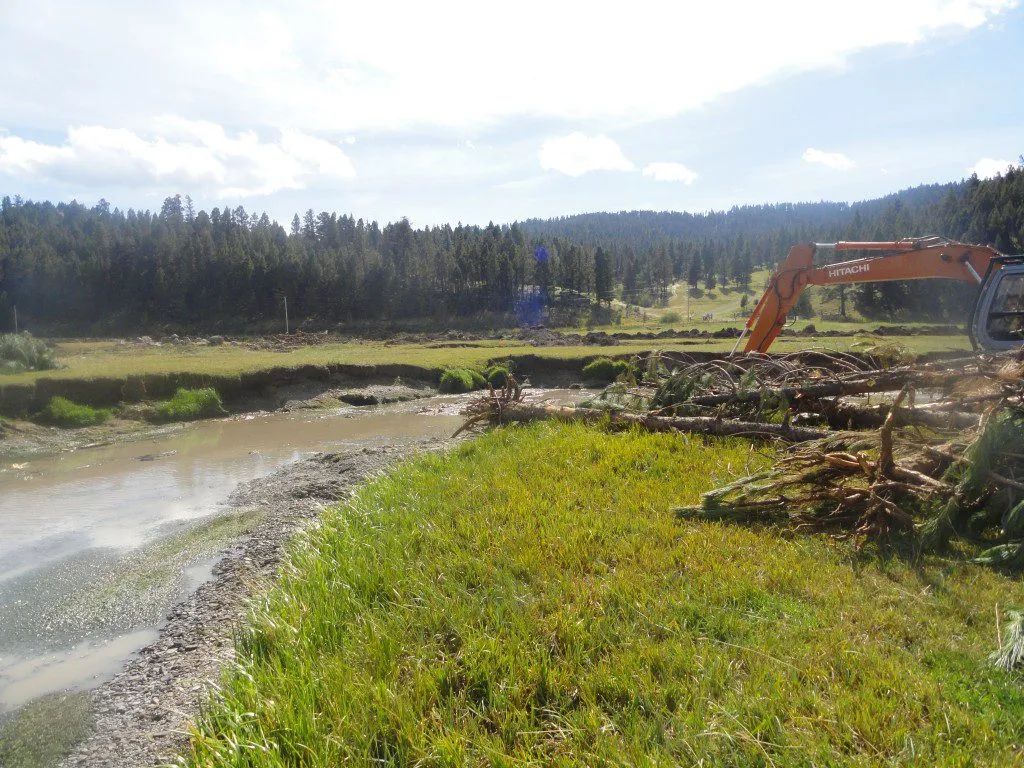
The Equipment Behind the Structures
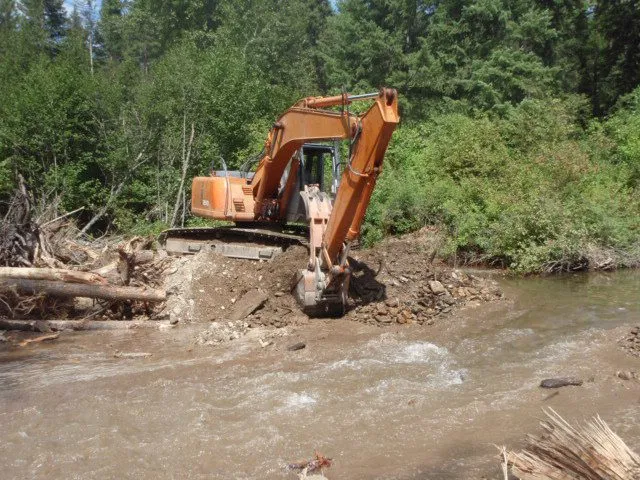
Structure work is excavator work first. Setting a thousand-pound root wad at a specified angle, or a footer boulder at depth in flowing water, takes a machine with reach and an operator with thousands of hours of thumb-and-bucket control. Glacier runs its own excavators, tracked trucks, dozers, loaders, and skid steers, so structure production never waits on a rental yard.
The tracked trucks earn their keep on bank work. Structure materials are heavy and the ground beside a stream is soft, and tracked haulers deliver logs and rock to the excavator without rutting the corridor a restoration project exists to protect. Staging runs on the loaders and skid steers, feeding material at the pace the excavator sets.
Every machine works under the same water discipline: designated crossings, clean fueling away from the channel, and erosion control maintained around the work. The structures protect the stream for decades. Building them should not cost the stream anything it cannot recover by spring.
Understanding Bank Stabilization Project Costs and Bidding
Straight answer: structure work is priced per structure and per station, driven by materials, access, and water management. No responsible contractor quotes it sight unseen, and we never quote by the foot of bank alone.
Factors That Drive Structure Costs
Structure type and count: a boulder grade control and a woody debris jam carry different material and placement costs. Material sourcing: on-site wood and rock versus imported. Access: how close equipment can work to the bank. Dewatering scope: the size of stream being diverted around the work. Bank height and condition: taller, wetter banks take more treatment above the toe. Work windows: permitted in-stream windows shape crew size and schedule.
Why the Low Bid Can Cost the Most
A structure placed out of tolerance does not fail politely. It redirects flow somewhere the design never intended, and the repair costs more than the structure did. Experience prices itself into a bid once. Inexperience prices itself into the project forever.
What a Complete Structure Bid Package Includes
Tight structure bids come off complete documents: a structure schedule with counts and stationing, detail sheets for every structure type, material specifications and sources, dewatering and fish rescue requirements, and the survey control the layout will run from. When the package is complete, bids compare cleanly. When it is not, every bidder prices the gaps differently and the owner ends up comparing guesses.
How Glacier Bids Structure Work
Send plans, specs, and the bid schedule through our contact page. Bob reviews every structure set personally and will tell you straight if a scope has a problem in it, because finding it at bid time serves you better than finding it at inspection.